Was this helpful?
Thumbs UP Thumbs Down

Walmart challenges Tesla with lower charging prices as U.S. fast charging competition expands nationwide

ev electric recharge station at a walmart in the shopping
Walmart chargers

Walmart pressures Tesla on price

Walmart is challenging Tesla on charging price and expansion speed. In August 2026, data reported by InsideEVs put Walmart’s average fast-charging price at $0.43/kWh. Tesla averaged $0.56/kWh. Walmart ranked fourth cheapest among 17 U.S. networks studied.

The price gap gives drivers a reason to consider Walmart instead of a Supercharger. Walmart is also adding company-operated chargers quickly at its stores. Tesla still has far broader coverage, but Walmart is competing directly for charging sessions as public fast-charging competition grows across the United States.

EV electric recharge station at a walmart

Walmart jumps to second place

That price challenge is backed by rapid construction. Paren’s July 14, 2026, report showed that Walmart added 368 public fast-charging ports during the second quarter. Those additions represented 8.4% of all new U.S. ports during the period. Tesla remained first with 1,185 new ports.

Walmart finished second, ahead of several established charging networks. The retailer had ranked ninth for new deployments during the first quarter. Its Q2 jump showed how quickly Walmart’s store-based charging strategy gained ground. The result made Walmart the fastest-growing major non-Tesla charging network during the quarter.

Public electric charging points are insufficient

Walmart builds its own network

The fast buildout was already visible before Paren published its quarterly report. By June 30, 2026, Walmart’s company-operated network had reached 612 charging stalls at 73 locations. Twelve sites opened during June, according to EV Charging Stations. That represented 20% growth during one month.

The network had 61 locations at the end of May. These figures cover Walmart-branded chargers, not every charger in Walmart parking lots. The distinction matters because Walmart has hosted third-party equipment for years. Its newer strategy gives the retailer more control over pricing, maintenance, and future expansion.

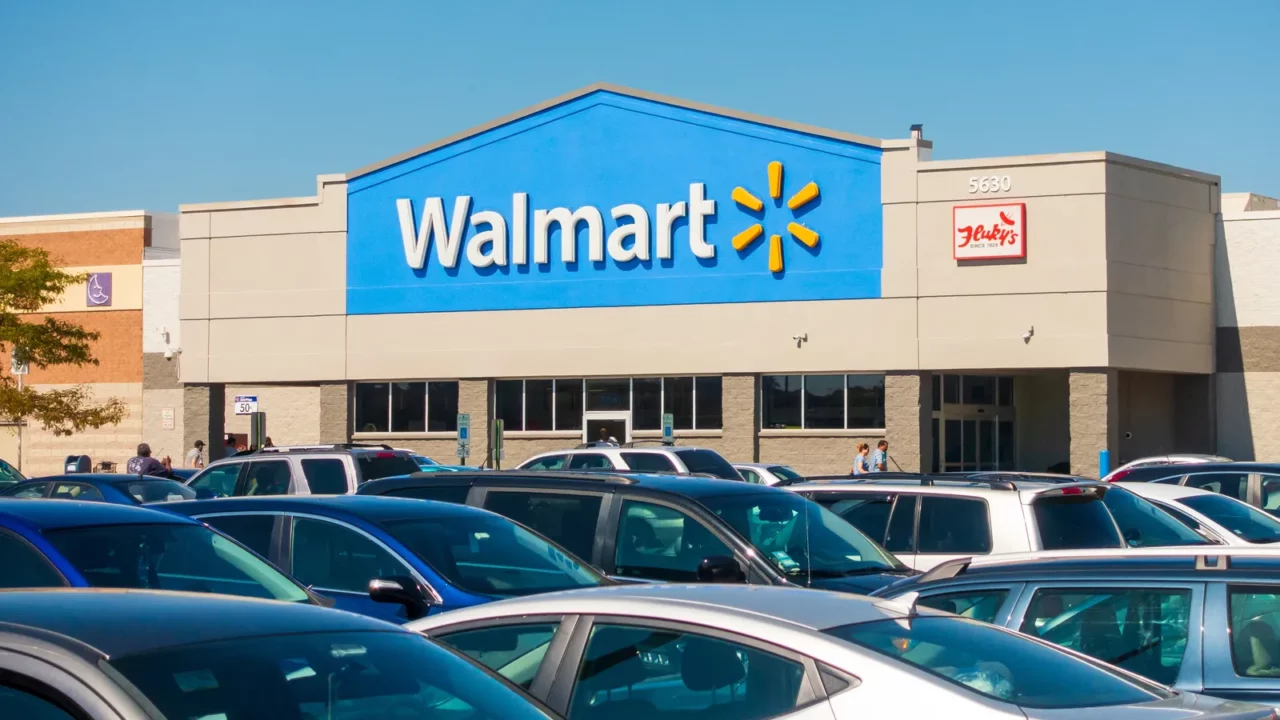
Walmart supermarket sign with cars parked

Walmart planned a national network

Walmart’s expansion follows a national plan announced on April 6, 2023. The company said it intended to build its own fast charging network at thousands of Walmart and Sam’s Club locations by 2030. Walmart also said a store or club sits within 10 miles of about 90% of Americans.

That footprint provides the company with many potential charging sites along everyday driving routes. Vishal Kapadia, then Walmart’s senior vice president of Energy Transformation, said the company could address range and charging anxiety. The plan tied Walmart’s store network directly to competition for U.S. EV charging customers.

Electric vehicle charging

Existing stores speed the rollout

By July 29, 2026, another measure showed how quickly Walmart was expanding. Through June, the retailer had opened about 46 high-speed public charging stations with 380 cords, according to U.S. Department of Energy data. Chargers of any brand were available at about 326 of Walmart’s roughly 4,600 U.S. stores.

Paren estimated that about 300 more Walmart charging stations were under construction. Those figures show how Walmart can expand through existing parking lots while still hosting outside networks. Drivers gain more charging options without Walmart needing to own separate roadside properties nationwide.

EV electric recharge station at a walmart

Charging can support store traffic

The retail setting also gives Walmart a reason to keep charging prices competitively. U.S. drivers completed 16.1 million public fast charging sessions in June 2026, according to Paren. Average charger use held at 15.8% during the second quarter. That was close to 15.6% in the first quarter, even as operators added more charging capacity.

Bloomberg reported that retailers value chargers because drivers can shop while their vehicles remain plugged in. Walmart can use that behavior differently from a roadside charging operator because its stations are located beside stores that already serve millions of shoppers each week.

Cropped view of an electric vehicle recharge battery at a charging station.

Members get another price cut

Walmart is also using its membership program to reduce charging costs further. Walmart says Walmart+ members receive a 10% discount on charging sessions at Walmart-branded stations. The company bills for electricity by the kWh and says it does not add hidden session fees.

Drivers can see pricing on the charger and in the Walmart app. They can also start a session and track charging through the app. Tesla uses location-based pricing that can change with site-specific factors such as occupancy and forecasted demand. Walmart is pairing its lower network average with a separate discount for members at participating locations.

Electric recharge station sign at a Walmart

Walmart supports two plug standards

Hardware gives Walmart another way to compete for drivers. The company says most of its charging locations have 8 to 16 fast-charging stalls. Its chargers can deliver up to 400 kW of power. Walmart installs both CCS and NACS connectors, allowing many U.S. electric vehicles to plug in directly.

NACS began as Tesla’s connector design and is now standardized as SAE J3400. CCS remains common on EVs already on American roads. Maximum charger output does not guarantee the speed for every vehicle. Each EV can accept only the power allowed by its own charging system.

ev electric recharge station at a walmart in the shopping

Walmart reaches 100 charging sites

Walmart reached another milestone on Aug. 21, 2026, when its 100th company-owned fast-charging site opened in Monument, Colorado. The network then covered 20 states. InsideEVs reported that Walmart had been operating in 17 states only one month earlier.

Shayne Wahlmeier, senior vice president of Walmart Energy, said the company’s broad store footprint could make charging more accessible to communities.

Walmart said it would continue working with local utilities and partners as new locations opened. The Monument milestone added a geographic growth measure to the rapid port deployment already recorded during the second quarter.

Tesla superchargers.

Tesla still has the larger network

Walmart’s growth is happening while Tesla’s share of U.S. fast charging becomes less dominant. Paren found that Tesla had 38,733 active fast-charging ports at the end of Q2 2026. That equaled 49.8% of the national total, the first time its cumulative share fell below half.

Tesla still opened much larger new sites. Its Q2 stations averaged 12.1 ports each, compared with 4.4 ports for non-Tesla networks. Tesla remains the largest single network, but Walmart and other operators are adding enough capacity to give drivers more choices across the country.

NACS charger.

NACS spreads beyond Tesla

Competition is also changing the connector mix available to drivers. Paren found that NACS accounted for 22.9% of new non-Tesla connectors during the second quarter of 2026. That was about double its share one year earlier. CCS still accounted for 70.8% of new non-Tesla connectors, while CHAdeMO represented 6.3%.

Walmart’s decision to install both NACS and CCS fits that transition. It can serve newer vehicles adopting the Tesla-originated standard while still supporting CCS-equipped EVs. Wider connector support can make Walmart charging useful to more drivers without forcing every customer to rely on an adapter.

Cars charging at station

Retail charging competition widens

Walmart is not the only retailer using parking lots to compete for charging traffic. Target said on June 25, 2026, that more than 300 U.S. stores across 42 states offered EV charging. Those locations included more than 3,000 charging stalls. Target also had 35 sites under construction and more than 100 in development.

Most hosted chargers are open to all EV models, according to Target. The comparison matters because Walmart is building a company-owned network instead of relying solely on hosted equipment. Retail parking lots are becoming an important part of the U.S. public-charging landscape.

What will happen to gas stations in an electric-vehicle future? looks at how traditional fueling businesses may need to adapt as public charging expands.

EV charging gun plugged in port with blur background.

U.S. fast charging has more rivals

The national charging market gives Walmart room to grow even as competition increases. Paren counted 77,776 public fast-charging ports across 14,514 U.S. stations at the end of Q2 2026. Operators opened 806 new stations during those 3 months, and about 72% of all newly added ports supported at least 250 kW.

That shows high-power equipment is becoming common in new construction. Walmart is entering a market where drivers increasingly have several fast-charging options. Its challenge is now to turn its large retail footprint and lower prices into regular charging stops for U.S. EV owners.

Walmart is bringing EV chargers to California, and members will pay less to use them. This shows how Walmart is using pricing and store locations to compete for customers.

Can Walmart’s lower charging prices challenge Tesla as U.S. fast charging expands? Share your thoughts in the comments.

Don’t forget to follow us for more exclusive content right here on MSN

Read More From This Brand:

This slideshow was made with AI assistance and human editing.

Was this helpful?
Thumbs UP Thumbs Down
Prev Next
Share this post

Send feedback to evsmarts


    We appreciate you taking the time to share your feedback about this page with us.

    Whether it's praise for something good, or ideas to improve something that isn't quite right, we're excited to hear from you.