Was this helpful?
Thumbs UP Thumbs Down

U.S. automakers race to replace Chinese car technology before new rules

Shot of assembly line of cars in an automobile factory.
The production line for the assembly of new vehicles.

U.S. auto industry changes suppliers

The United States auto industry is replacing Chinese connected car hardware to meet new federal rules. The rules ban certain Chinese connectivity software in 2027 model-year vehicles and connected hardware in 2030 model-year vehicles.

The policy was adopted in January 2025 over national security and data privacy concerns. Automakers must choose compliant suppliers years before production, since vehicle development begins well before a model reaches dealerships.

Workers at a car plant

Eagle Wireless expands production

Eagle Wireless was formed in late 2025 to supply connected-vehicle modules that meet the new U.S. requirements. The Ohio company started with about 140 employees and aims to grow to 1,000 workers within 3 years.

Its revenue expectations for 2026 increased by almost 100%, to nearly $100 million, as demand grew. The company is expanding production capacity to support automakers preparing for future compliance deadlines.

tianjin china december 17th 2016 workers assemble a car on

Chinese module ban reshapes sourcing

The federal rule applies to hardware that enables vehicles to communicate with external networks. Examples include satellite communication systems, external antennas, microcontrollers, and wireless connectivity modules.

Automakers are replacing these components well before the 2030 deadline because vehicle programs are planned years in advance of production. The transition is changing supplier relationships and sourcing decisions across the auto industry.

Shot of assembly line of cars in an automobile factory.

Costs increase with new suppliers

Replacing Chinese connectivity hardware increases production costs for many manufacturers. Eagle Wireless said its modules currently cost about 5% to 15% more than comparable products from Chinese competitors.

Industry executives also found that replacing some Chinese technology with alternatives can significantly increase prices. Companies continue searching for ways to reduce those added costs while meeting federal requirements.

car body construction in the automotive industry part of a

Supply chains face closer reviews

Automakers are examining their supply chains more closely to identify components sourced from China. Suppliers are being asked to provide deeper visibility into where parts are designed, developed, and manufactured.

The compliance effort extends beyond direct suppliers, as many electronic components come from complex global supply chains. Companies must verify that future vehicles do not include restricted connected hardware.

Shot of Polestar dealership.

Polestar case raises urgency

The industry’s compliance efforts gained urgency after Polestar faced a U.S. ban on future new-vehicle sales under the connected-vehicle rule. The company is majority owned by China’s Geely.

The case highlighted how the regulation can directly affect vehicle sales. Automakers are working to avoid similar compliance problems before future deadlines.

Shot of Rivian service center.

Rivian says flexibility helps

Rivian believes its newer business structure makes supplier changes easier than for some long-established automakers. The company carefully selects suppliers and develops backup plans for possible geopolitical disruptions.

Building alternative sourcing options reduces the risk of production delays if regulations or trade conditions change. That flexibility helps support long-term compliance with the connected vehicle requirements.

Production line of a automaker.

Some automakers seek authorization

Some manufacturers are requesting permission to continue importing certain China-built vehicles. Ford has requested authorization to keep importing its China-built Lincoln Nautilus SUV.

Volvo has already received specific authorization under the rule. These authorizations show that some companies are still managing the transition while broader compliance work continues.

Robotic arm production lines modern industrial technology automated production cell

Factory targets 2 million modules

Eagle Wireless expects its Ohio operation to reach an annual production rate of about 2 million modules by the end of the third quarter of 2026. A nearby expansion is planned to further increase production capacity.

The factory uses automated equipment to assemble circuit boards before quality inspections and packaging. Robotic systems help move completed modules through the production process.

Chongqing, China.

China still leads module market

Chinese companies account for nearly half of global shipments of automotive cellular IoT modules. The market remains concentrated among a relatively small number of major manufacturers.

In North America, Eagle Wireless competes with companies including Rolling Wireless and LG. Expanding domestic production gives automakers additional sourcing options that are outside China.

An export container

China partnerships create tradeoffs

Some U.S. manufacturers continue using licensed Chinese technology in selected products. Ford, for example, licenses battery technology from CATL for battery production in the United States.

These partnerships can provide faster access to advanced technology while companies develop their own expertise. At the same time, U.S. automakers are trying to reduce exposure to restricted Chinese connected-vehicle technology under the federal rule.

More Chinese EVs arrive in Canada, with consumer data showing strong willingness to purchase, underscoring the need for Canadian automakers to secure North American access as new rivals grow nearby.

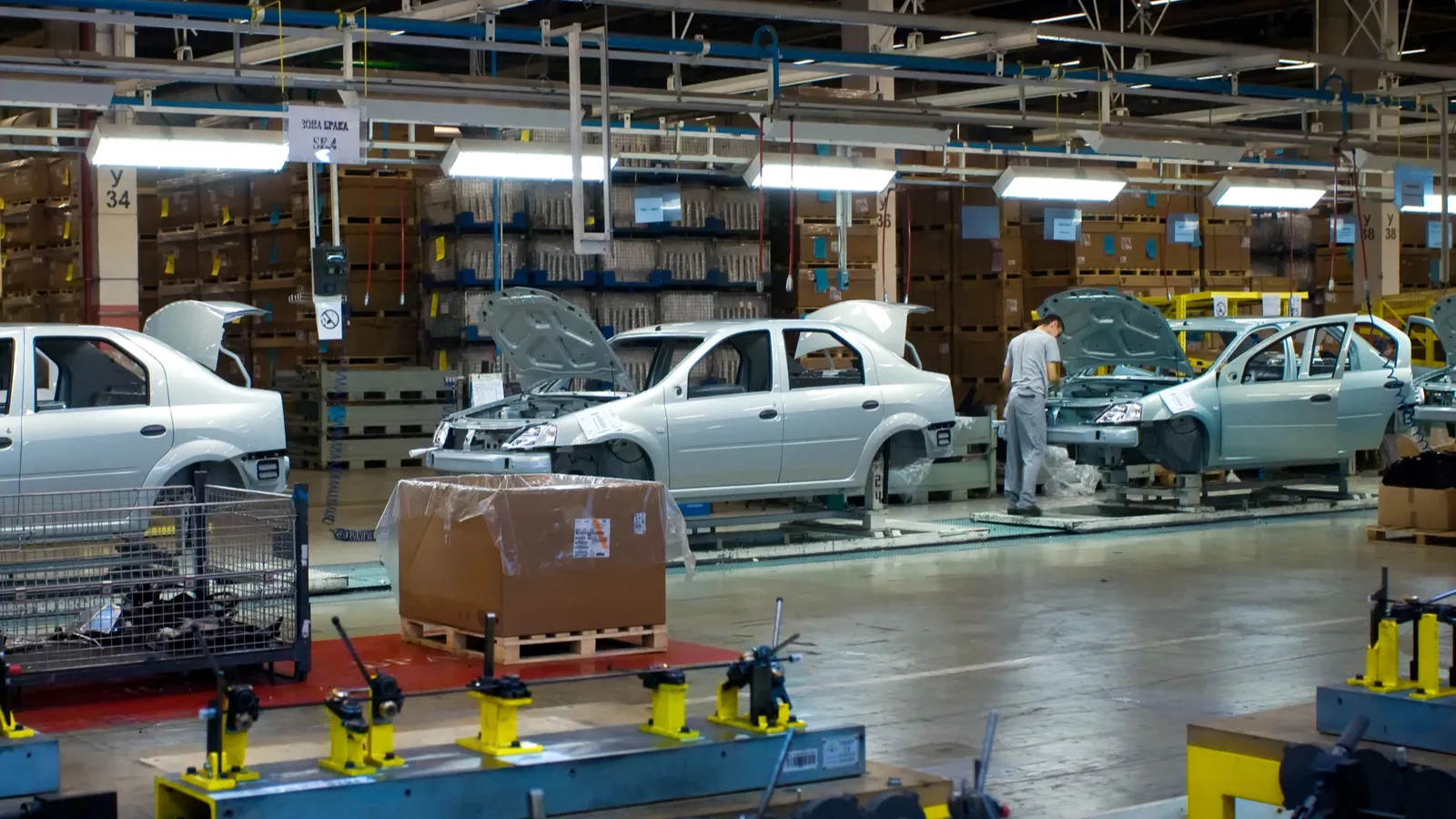
Car production line

Industry prepares years ahead

Automakers cannot wait until 2027 or 2030 because vehicle programs are planned several years before production begins. Supplier decisions made today will determine whether future vehicles meet federal requirements.

The new rules are reshaping electronics sourcing, manufacturing investment, and supply chain planning across the U.S. auto industry. Companies that complete the transition early will be better positioned for future vehicle launches.

Curious which legendary vehicles came from brands that no longer exist? Explore the full list and revisit some of the most memorable cars ever built.

Stay informed about the latest changes in connected vehicle technology. Follow for more fact-based updates on the auto industry.

Don’t forget to follow us for more exclusive content right here on MSN

Read More From This Brand:

This slideshow was made with AI assistance and human editing.

Was this helpful?
Thumbs UP Thumbs Down
Prev Next
Share this post

Lucky you! This thread is empty,
which means you've got dibs on the first comment.
Go for it!

Send feedback to evsmarts


    We appreciate you taking the time to share your feedback about this page with us.

    Whether it's praise for something good, or ideas to improve something that isn't quite right, we're excited to hear from you.