8 min read
I know it looks like 3YD but it’s actually BYD it stands for Build Your Dreams
8 min read

Toyota has a plan to reduce carbon pollution without focusing solely on one type of car. The 2025 plan includes more battery electric vehicles (BEVs), plug-in hybrid electric vehicles (PHEVs), and regular hybrid electric vehicles (HEVs).
Leaders say that every country has different needs, since not all places have the same power or charging infrastructure. The company wants people to choose the type of car that works best for their location. This way, drivers help the earth now, while Toyota keeps working toward carbon neutrality worldwide

The Toyota Research Institute tested a new app called ChargeMinder in the United States. In TRI-run U.S. pilot programs, charging-reminder prompts were associated with approximately 10% more plug-ins and higher reported satisfaction among participants.
In fact, every driver in the test group reported being happy to some extent. The study demonstrated that small reminders can significantly influence people’s behavior.

The ChargeMinder app was also tested in Japan. This time, it asked people to plug in when the sun and wind were making the most power. With these reminders, plug-in and battery car drivers charged 59% more during daytime hours.
On average, each car added about 30 more minutes of clean charging each day. These small pushes proved that simple apps can help drivers use greener energy instead of relying on power made from gas and coal on the grid.

Hybrid cars keep getting more popular. In Australia in 2021, RAV4 topped SUV sales with 35,751 registrations (VFACTS). Hybrids represented a major share, underscoring strong buyer interest. In the U.S., during the first seven months of 2025, Toyota sold 110,400 RAV4 Hybrids, which beat the sales of all Lexus hybrids combined.
This proves that buyers appreciate the gas savings that hybrids offer, even if they cost more initially. The numbers show that people are ready to pay for improved fuel efficiency and reduced emissions.

Real-world driving shows that plug-in hybrids (PHEVs) can produce more pollution than lab tests indicate. European analyses (ICCT, EEA-linked work) indicate that real-world PHEV CO₂ emissions often exceed WLTP by 2–5 times due to low charging frequencies.
The official lab test, known as WLTP, indicated only 28 grams. That’s nearly five times less. The main reason is that many drivers don’t plug in often, so the gas engine runs too much. Apps like ChargeMinder can help solve this problem by getting people to charge

Toyota is accelerating its line of all-electric “Beyond Zero” cars, known as bZ. The bZ4X SUV, built in collaboration with Subaru, features a 71.4 kWh battery and offers a range of approximately 252 miles per charge, according to the EPA for the front-wheel drive model.
Toyota has invested in launching a three-row BEV built in Kentucky by mid-decade; the name/timing remain unconfirmed beyond the investment announcements. This model will provide families with more space. Both cars utilize Toyota’s special e-TNGA electric platform, which is specifically designed for battery-powered vehicles. Toyota wants these models to compete in fast-growing markets

Toyota aims to sell 3.5 million electric cars (BEVs) annually worldwide by 2030. Currently, sales are significantly lower, making this a substantial goal.
The company also aims to sell a total of 5.5 million electrified cars, comprising hybrids (HEVs), plug-in hybrids (PHEVs), electric vehicles (BEVs), and hydrogen fuel cell cars (FCEVs).
The plan shows Toyota is moving all its cars toward cleaner energy. Even so, hybrids will still play a significant role, as they provide immediate benefits.

Toyota plans to build more electric cars in the next few years, but had to adjust the numbers. Initially, it aimed for 600,000 BEVs by 2025. Now, the new goal is just over 400,000.
This is still four times more than the 100,000 BEVs it sold in 2023. The change is due to electric sales worldwide growing more slowly than expected. The company’s larger 2030 goal of 3.5 million BEVs remains unchanged.

To build cars faster, Toyota is trying new factory methods like gigacasting. This uses giant machines to press hot aluminum into significant car parts, like the front and back frames, in one piece.
Regular cars use nearly 100 parts for these sections, but gigacasting can reduce that number to about 10. Fewer parts mean lower costs, stronger cars, and quicker work in the factory. This process will start with Toyota’s 2026 electric models as part of its growth.

The 2025 version of the bZ4X SUV will receive updates, including faster charging and improved software. Toyota will also launch the larger bZ5X SUV that year. The company also manufactures solid-state batteries, known as SSBs.
These new batteries could let a car drive over 620 miles (1,000 km). However, early versions are expected to travel approximately 520 miles and are anticipated to arrive around 2027. Solid-state batteries could change electric driving by providing greater distance and faster charging for future models.

Toyota has put nearly $14 billion into a new battery factory in North Carolina, called Toyota Battery Manufacturing, North Carolina (TBMNC). Toyota’s North Carolina battery complex (TBMNC) has expanded to US$13.9–$14B in committed investment, with phased production ramping mid-decade
Building in the U.S. helps Toyota keep a steady supply of batteries without relying too much on other countries. The investment also supports jobs in America. This move demonstrates Toyota’s commitment to expanding electric and hybrid production for drivers in North America.

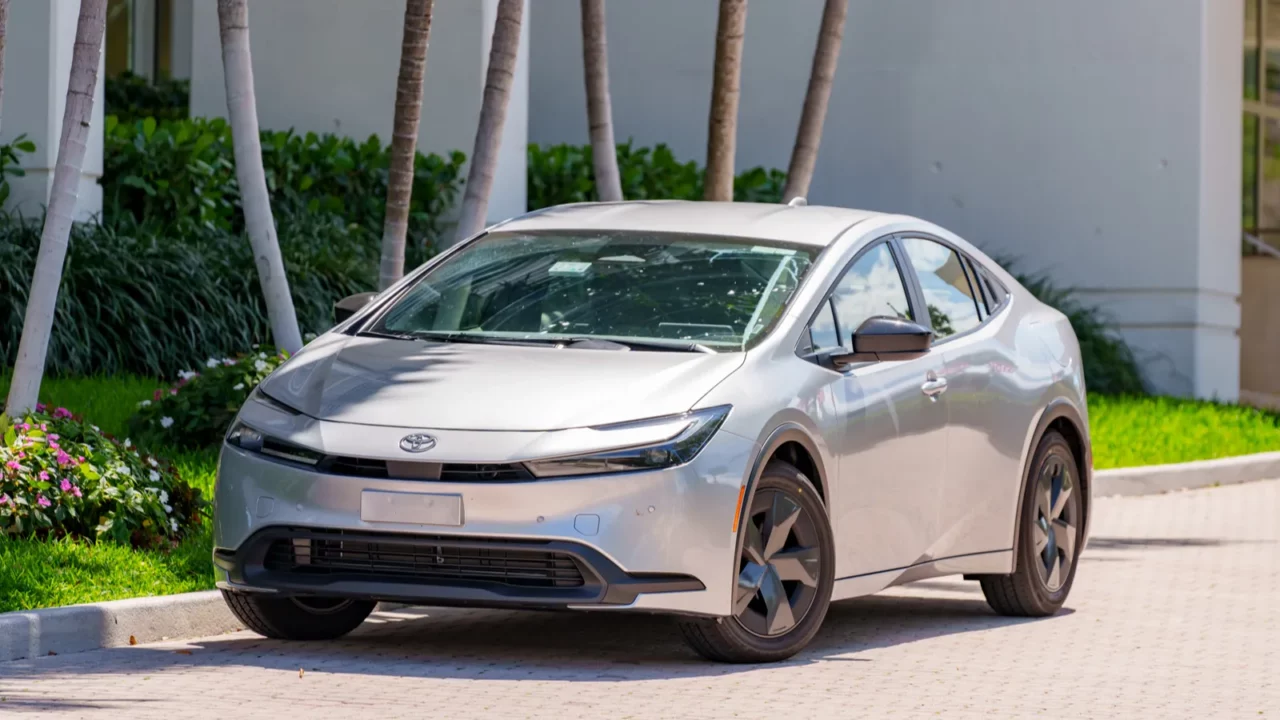
Toyota remains focused on plug-in hybrids (PHEVs), particularly with its new Prius Prime. According to the EPA, the latest model can drive up to 44 miles on electric power alone. For many people, that’s enough for most daily trips without using gas.
When the battery runs out, the car switches to its gas engine. This makes long trips easy and removes the fear of getting stuck without a charge. The Prius Prime shows why PHEVs remain essential.

Toyota views hydrogen fuel cell cars (FCEVs) as a crucial component of its strategy, particularly for large trucks, buses, and other heavy-duty vehicles. These cars use hydrogen to make electricity in a fuel cell.
The only thing that comes out is water. Toyota’s Mirai, its passenger FCEV, can drive about 402 miles on a full tank. It also takes only a few minutes to refill. This produces helpful hydrogen for large vehicles that require longer ranges than battery cars can provide.

Toyota started working on hydrogen fuel cell cars with the Mirai in 2014. In February 2025, the company showed its third-generation fuel cell system. It was primarily designed for commercial vehicles, such as trucks and buses.
The new system adds 20% more range for smaller passenger cars compared to the last version. Toyota also wants this system to last as long as diesel engines, which are renowned for their durability. This demonstrates Toyota’s commitment to advancing FCEVs for the future.

The key to Toyota’s hybrid cars is the Hybrid Synergy Drive (HSD). This system decides when to use the gas engine, the electric motor, or both simultaneously. The first version, the Toyota Hybrid System (THS), came out in Japan in 1997 in the Prius.
The newer HSD system arrived in the 2004 Prius and used special gears to combine power. Since then, over 20 million hybrids worldwide use HSD. It remains Toyota’s most crucial hybrid technology.
Curious how much extra buyers might be paying? Read more in Tariffs add significant costs to Toyota and Honda vehicles.

The first hybrid car sold to the public was Toyota’s Prius, launched in Japan in December 1997. It was a small four-door car that got 28 kilometers per liter on Japanese fuel tests.
Around 2000, the Prius came to North America and Europe. Buyers saw it worked well and saved gas, so sales grew. The car proved that a gas engine and an electric motor could be reliable. This launch started the global move to hybrid cars.
Wondering where the newest chargers are popping up? Take a look at Electrify America expands EV fast-charging network.
Would you use an app that rewards you for charging?
Read More From This Brand:
Don’t forget to follow us for more exclusive content right here on MSN
This slideshow was made with AI assistance and human editing.
We appreciate you taking the time to share your feedback about this page with us.
Whether it's praise for something good, or ideas to improve something that
isn't quite right, we're excited to hear from you.