6 min read
I know it looks like 3YD but it’s actually BYD it stands for Build Your Dreams
6 min read

Tesla Inc. formally introduced limited Cybercab rides in Austin, Texas, on September 3, 2026, as it expanded its robotaxi effort in the United States. The two-seat, purpose-built autonomous car has no steering wheel or pedals and is designed to operate without a human driver.
Texas records showed Tesla had 45 Cybercab vehicles among its registered autonomous vehicles around the time of the event. The company has also been operating a robotaxi service using modified Model Y vehicles, including supervised and unsupervised operations in multiple U.S. markets.

Tesla reported 380,000 cumulative miles of unsupervised robotaxi rides in July 2026, while Waymo reported 220 million driverless miles through March. Waymo launched its commercial ride-hailing service in 2018 and has since accumulated far more fully autonomous operating mileage.
Tesla’s reported mileage equals less than 0.2% of Waymo’s stated total. Tesla has operated its robotaxi service with Model Y SUVs since June 2025, with company employees present in some vehicles during earlier stages.

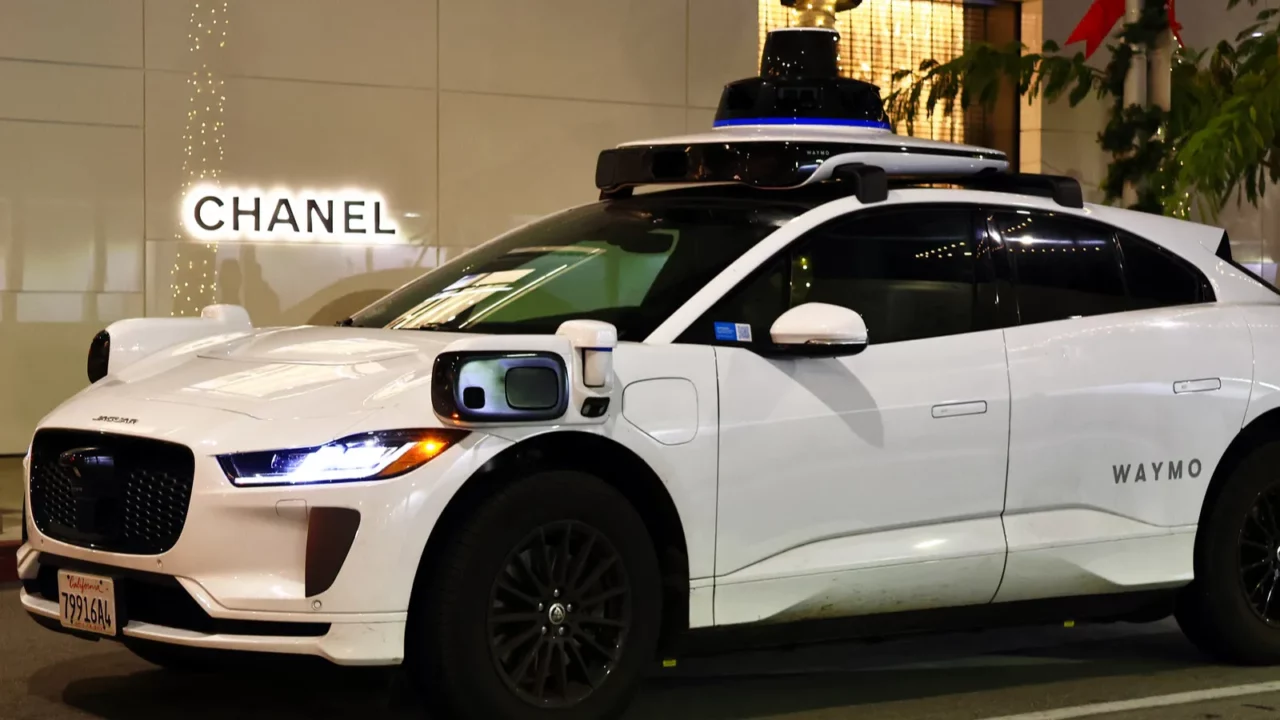
Waymo said in March 2026 that its driverless cars were providing 500,000 paid rides each week, twice the weekly total from a year earlier. Its customer service operates with fully autonomous vehicles without a human driver behind the wheel.
Waymo expanded into Denver, San Diego, and Tampa on September 1, bringing its driverless service to 14 U.S. cities. Its fleet has grown to around 4,000 robotaxis, giving Waymo a larger operating network than Tesla.

Tesla offers unsupervised robotaxi rides in 6 cities across Texas and Florida. Elon Musk previously said Tesla’s robotaxi service would be available to half of the U.S. population by the end of 2025.
Tesla has kept its trials relatively small while saying safety takes priority over rapid expansion. In recent weeks, the company removed safety monitors from a majority of the vehicles used in those trials, increasing the number operating without onboard supervision.

Tesla designed the Cybercab as a purpose-built two-seat vehicle for autonomous ride service rather than for normal private driving. The car has no steering wheel or pedals and relies on cameras and artificial intelligence for its driving system.
Cybercab also uses a relatively small battery compared with larger passenger vehicles. A recent Tesla filing showed the company targeting annual Cybercab production of more than 125,000 vehicles as it prepares for broader manufacturing.

Tesla is pursuing full autonomy using cameras and artificial intelligence rather than adding lidar and radar to its vehicles. Elon Musk has long criticized lidar and has argued that Tesla can achieve autonomous driving with a camera-based system.
Tesla’s software uses an end-to-end approach that takes visual information and turns it into driving commands through neural networks. The system is intended to control vehicles across roads, under various traffic conditions, and in other driving environments without human input.

Waymo uses cameras, lidar, and radar together to detect and interpret the environment around its autonomous vehicles. The company says combining several sensor types provides information and backup coverage that a single sensor cannot match.
Waymo software executive Srikanth Thirumalai cited more than 200 million real-world driverless miles when defending the company’s multi-sensor approach. Waymo also said that pure end-to-end AI systems can create black-box failures that are difficult to interpret.

Tesla faces competition in autonomous driving from Waymo, WeRide, Baidu’s Apollo Go, Amazon’s Zoox, and other companies developing commercial driverless services. NVIDIA is also working with major automakers and mobility companies on technology for advanced autonomous vehicles.
Investor Gary Black said major Tesla rivals were collectively completing more than 1 million paid unsupervised autonomous rides per week. He also argued that unsupervised autonomy is becoming a basic competitive requirement in the global auto industry.

Waymo’s fleet has grown to more than 4,000 autonomous vehicles, providing fully autonomous rides across 14 U.S. cities. Operating at that scale exposes its vehicles to varied weather, emergency activity, school zones, traffic, and other city driving conditions.
Robotaxi fleets also require cleaning, maintenance, charging, fleet management, and other support services as part of daily operations. Tesla will face similar fleet support requirements as it expands its autonomous ride service and adds Cybercabs.

Neither Tesla’s robotaxi service nor Waymo has reported standalone financial results showing profitable driverless ride operations. Waymo has said it sees a path to profitability but has not given a date for reaching that point.
Alphabet reports Waymo within its Other Bets segment, which lost $3.9 billion in the first half of 2026 on $793 million in revenue. The segment generated $823 million in revenue during the same period a year earlier and includes businesses beyond Waymo.

Robotaxi companies face continuing operating expenses after developing the vehicles and software required for autonomous driving. Autonomous vehicle expert Bryant Walker Smith said fleets must pay for cleaning, maintenance, and other services that human ride-hailing drivers often provide themselves.
Smith said robotaxi services can compete with drivers who supply and maintain their own vehicles while earning relatively low wages. Autonomous fleets, therefore, must account for vehicle upkeep and other operating services as part of their costs.

Tesla has faced more difficulty than Waymo in gaining regulatory approval to expand its robotaxi service into additional markets. Driverless car companies must navigate different rules and approval systems as they enter new locations.
Waymo has expanded commercial driverless rides to 14 U.S. cities as of September 2026. Tesla’s unsupervised robotaxi service remains available in 6 cities across Texas and Florida.
Jay Leno tested a Tesla Semi built with a battery designed to last up to 1 million miles. Understand how this long-life battery could impact trucking durability and operating costs.

Tesla argues that its robotaxi system can cost less because it builds its own vehicles and uses cameras rather than the lidar-and-radar combination used by Waymo. Waymo obtains vehicles from manufacturing partners and equips them with its autonomous driving system.
Waymo’s Ojai robotaxi is built in China by Zeekr before Waymo installs its autonomous technology in Arizona, and those imported vehicles face U.S. tariffs. Waymo currently operates more vehicles across more U.S. cities and has accumulated far more fully autonomous mileage than Tesla.
Tesla has reached 75,000 Supercharger stalls across its global network. See how this expansion improves charging access and supports EV growth.
Tesla and Waymo are scaling two very different approaches to driverless transportation. Follow how Cybercab’s rollout changes the U.S. robotaxi race.
Don’t forget to follow us for more exclusive content right here on MSN
If you liked this, you might also like:
This slideshow was made with AI assistance and human editing.
We appreciate you taking the time to share your feedback about this page with us.
Whether it's praise for something good, or ideas to improve something that
isn't quite right, we're excited to hear from you.

Lucky you! This thread is empty,
which means you've got dibs on the first comment.
Go for it!