6 min read
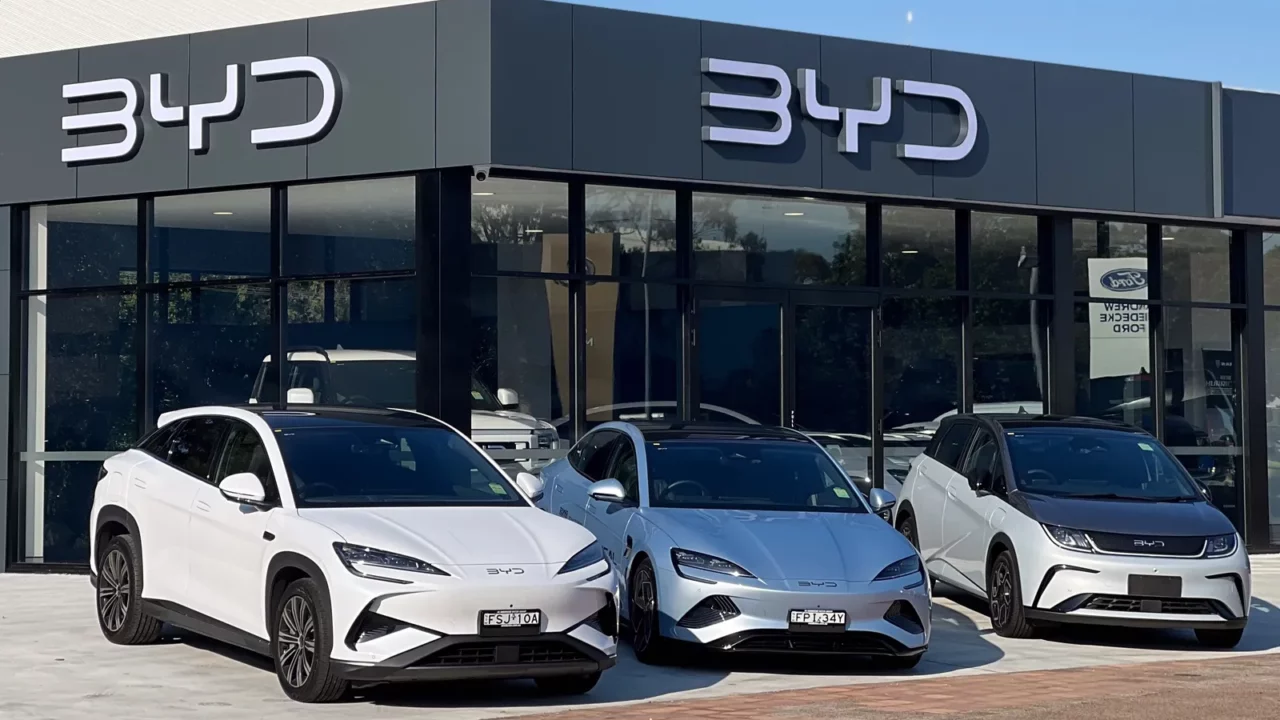
I know it looks like 3YD but it’s actually BYD it stands for Build Your Dreams
6 min read

Stellantis is reassessing its approach to electrification in South America as Chinese automakers gain ground with newer technology and aggressive pricing. Regional chief Herlander Zola said the company must respond to a rapidly changing market.
The review could reshape which powertrains Stellantis offers, how it uses local fuels, and how closely it works with Chinese partner Leapmotor. An updated regional technology roadmap is expected later in 2026.

Chinese automakers are expanding rapidly in Brazil, increasing pressure on long-established brands such as Jeep. BYD alone reached a record 9.1% share of Brazil’s market in July 2026, according to Reuters, after selling 23,465 vehicles.
Stellantis executives have acknowledged that newer technology at competitive prices is changing customer expectations. That makes Brazil a key test of how quickly traditional automakers can refresh products without giving up their existing strengths in local manufacturing and flex-fuel vehicles.

Jeep has lost some ground in Brazil as Chinese competitors introduced newer electrified vehicles in similar price ranges. Zola said the brand was slow to refresh parts of its product and technology offering as the market changed.
The issue is not simply about adding battery-electric models. Stellantis must decide which technologies fit local demand, fuel availability, charging access, and price sensitivity while keeping Jeep competitive in one of South America’s largest vehicle markets.

Stellantis is studying a flex-fuel version of range-extender technology linked to Leapmotor. A range-extender vehicle uses an electric motor for driving while a small engine generates electricity when needed, reducing dependence on charging alone.
Stellantis is considering adapting that idea to fuels commonly used in Brazil, including ethanol blends. The approach could give drivers more electric-style operation without requiring the same charging habits as a fully battery-powered vehicle.

Stellantis already has a major strategic relationship with Leapmotor, giving it access to technology developed by a fast-growing Chinese electric-vehicle company.
The partnership is becoming increasingly important as Stellantis seeks to improve its competitiveness in markets where Chinese brands have strong cost, platform, and development advantages.
Stellantis has also confirmed that Leapmotor vehicles will be produced in Brazil starting in 2026, making the relationship relevant to both its technology strategy and regional manufacturing.

Stellantis is also evaluating vehicles designed to run exclusively on sugarcane ethanol, with plans contingent in part on future government incentives. Ethanol is already well established in Brazil’s fuel market, making it a practical option for technologies tailored to local conditions.
Instead of following a single global electrification formula, the company is considering ways to combine lower-emission driving with fuels drivers already use. That could help Stellantis differentiate its South American strategy from battery-only approaches.

Brazil gives automakers a different set of choices because ethanol and flex-fuel engines are already common. That allows companies to combine electrification with locally available renewable fuel rather than relying solely on gasoline or large batteries.
BYD has already launched a Brazil-made plug-in hybrid that can use electricity, gasoline, or ethanol. Stellantis is now exploring its own combinations, showing how competition is pushing automakers to develop technology specifically for Brazilian drivers rather than simply importing global solutions.

Stellantis says electrification cannot follow a single formula across South America because markets differ widely in charging networks, fuel systems, income levels, and government policies. Zola said the company is weighing electric and hybrid options on a country-by-country basis.
A technology that fits Brazil’s ethanol-heavy market may not be the best choice elsewhere. The regional strategy, therefore, centers on flexibility, allowing Stellantis to adjust powertrains and products as adoption patterns change from one country to another.

Uruguay shows the opposite side of South America’s uneven transition. The International Energy Agency says electric cars reached nearly 30% of new-car sales there in 2025, after sales more than doubled from 2024 levels.
That rapid growth highlights why Stellantis cannot treat the region as a single market. In countries where charging, policy, and consumer demand support battery-electric vehicles, the company may need a different product mix than in markets where hybrids or ethanol-based solutions are more practical.

Jeep is using the locally produced Avenger as an early step in its effort to regain momentum in Brazil’s compact SUV market. The Brazilian Avenger launched with a 1.0-liter turbo flex engine paired with mild-hybrid technology, giving every version some level of electrification.
Stellantis began production at its Porto Real plant in 2026, tying the model to its broader investment in local manufacturing. The Avenger also puts Jeep into a smaller, highly competitive SUV segment.

The Avenger enters a crowded Brazilian market where value, efficiency, safety equipment, and technology can strongly influence buyers. Its launch comes as Chinese brands expand with competitively priced electric and plug-in hybrid models.
Jeep is positioning the Avenger as a compact alternative with local production, flex-fuel capability, mild-hybrid assistance, and familiar brand recognition. That mix gives Stellantis a way to defend its share without relying solely on a fully electric vehicle to compete with newer competitors.

Stellantis is pairing new technology with local production rather than relying only on imported vehicles. The Avenger is being built at Porto Real, while Leapmotor production is also scheduled to begin in Brazil in 2026 at the Goiana automotive hub.
Local assembly can help the company adapt vehicles to regional preferences, manage costs, and respond faster to changing demand. It also shows that Stellantis views South America as an important manufacturing base, not only as a sales market.
Curious why Stellantis is recalling thousands of diesel vehicles in Europe and how a camshaft defect could affect engine reliability? Explore the full details and affected models.

Stellantis plans to outline an updated South America technology roadmap later in 2026, which should clarify how far it will push flex-fuel hybrids, range extenders, ethanol-only vehicles, and battery-electric models.
The company’s direction will be shaped by competition, government incentives, local infrastructure, and customer demand. The central question is no longer whether electrification is coming, but which mix of technologies can keep Stellantis competitive across very different South American markets.
Discover how new reports are raising questions about Jeep suspension repairs and why some owners remain concerned despite previous recall work being performed.
Chinese automakers are putting new pressure on Jeep in Brazil. Do you think Stellantis should embrace more Chinese technology to fight back?
Don’t forget to follow us for more exclusive content right here on MSN
Read More From This Brand:
This slideshow was made with AI assistance and human editing.
We appreciate you taking the time to share your feedback about this page with us.
Whether it's praise for something good, or ideas to improve something that
isn't quite right, we're excited to hear from you.