Was this helpful?
Thumbs UP Thumbs Down

Ford CEO Jim Farley warns of China’s growing EV lead

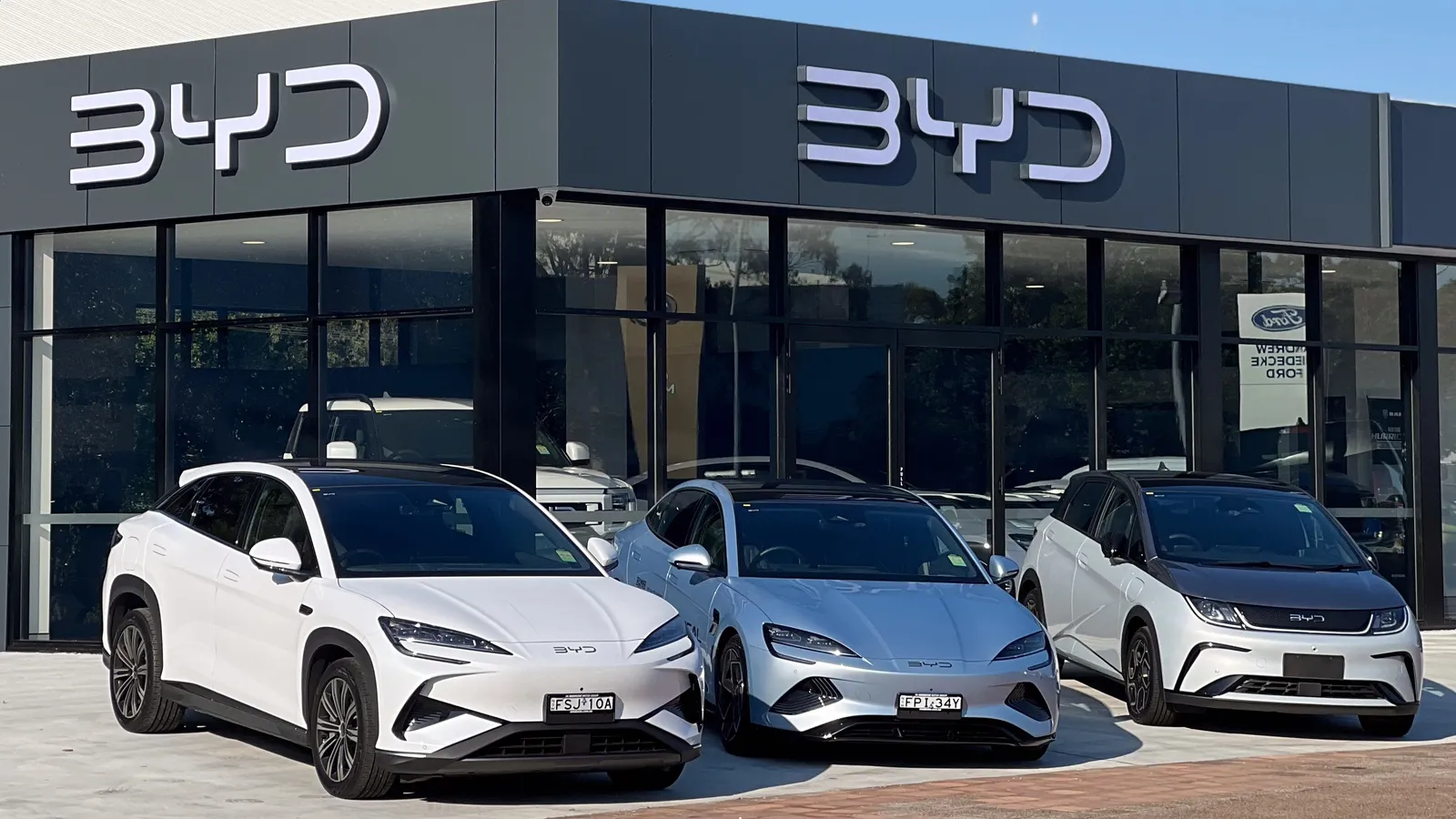
Shot of BYD showroom.
Shot of Ford CEO Jim Farley at an event.

Farley has been warning that the threat is bigger than one bad sales year

Ford CEO Jim Farley has repeatedly described Chinese automakers as a serious competitive challenge rather than a temporary disruption in the EV market.

Earlier this year, Farley warned that Ford’s future could be at risk if the company makes the wrong strategic choices as the industry shifts toward electric, software-driven, and increasingly affordable vehicles.

His concern has become more concrete as Chinese manufacturers expand production, improve technology, and move aggressively into international markets. Farley recently pointed to Europe as a warning, arguing that Chinese automakers have already gained enough ground there to make the competitive response much harder.

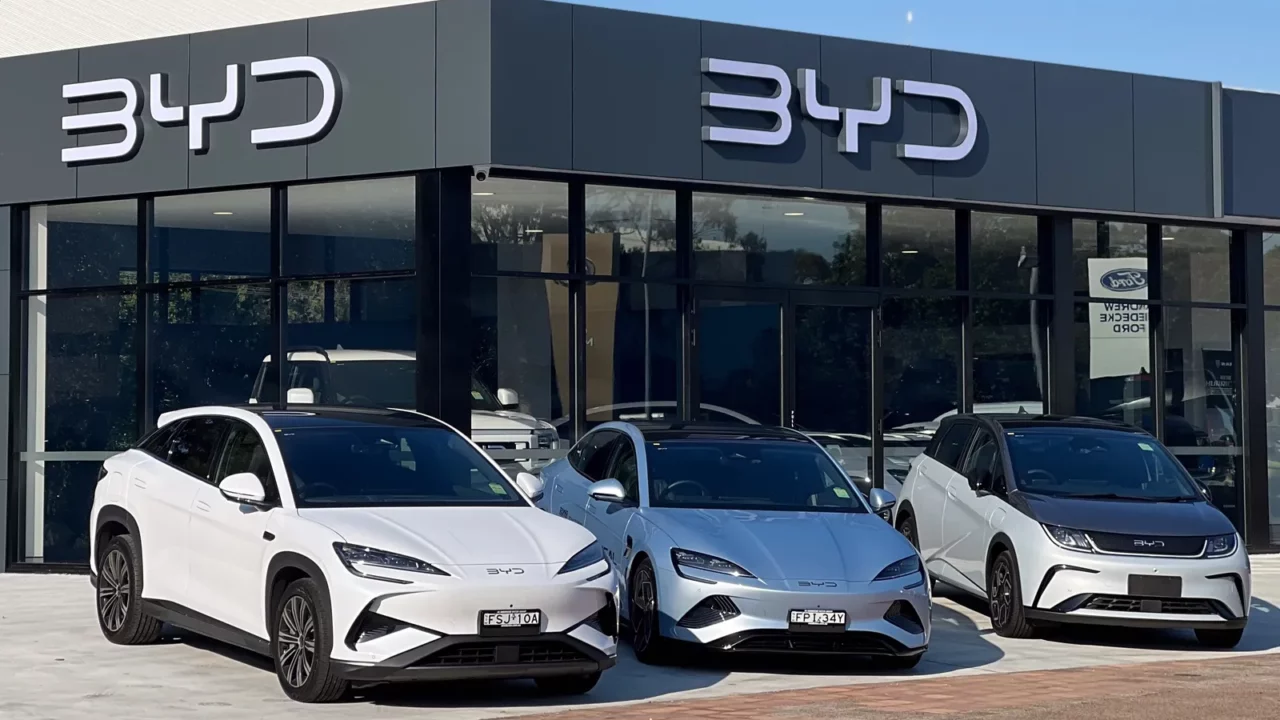
Shot of BYD showroom.

BYD has already taken the global EV sales crown from Tesla

The clearest sign of China’s progress is BYD. The Chinese company overtook Tesla in annual battery-electric vehicle sales in 2025, ending Tesla’s position as the world’s largest seller of fully electric cars.

Tesla delivered about 1.64 million vehicles in 2025, while BYD moved ahead after continuing to expand both at home and overseas.

The shift matters because Tesla had long represented the benchmark for global EV scale. BYD’s rise shows that Chinese manufacturers are no longer simply competing on price inside China.

A lot of new cars parked at the showroom.

China now controls the largest share of the global EV market

China’s advantage extends well beyond BYD. ICCT data shows that more than 20 million electric vehicles were sold globally in 2025, representing roughly one in four new vehicles.

China accounted for 62% of global light-duty EV sales and about 71% of global EV production. More than 12.8 million EVs were sold inside China alone.

The United States moved in the opposite direction on global production share. ICCT estimates that the U.S. share of global EV production fell from 7% in 2024 to 5% in 2025 as manufacturers delayed projects and reduced planned investments.

Car production line

The investment gap between Detroit and Chinese automakers is striking

Dale Hall of the International Council on Clean Transportation has highlighted another major difference: the extent to which automakers are investing in electrification relative to the vehicles they sell.

Ford, General Motors, and Stellantis each invested less than $400 in EV research, development, and production for every passenger vehicle sold last year.

Chinese manufacturers, including BYD, SAIC, and Geely, invested between $1,700 and $2,750 per vehicle on a sales-adjusted basis. That gap does not guarantee future success, but it shows how differently the two groups are currently allocating resources toward electrification.

Shot of dollar banknotes on table.

Ford expects about $19.5 billion in EV-related charges as it changes its strategy

Ford’s own restructuring shows how difficult the transition has become. In December 2025, the company said it expected to record about $19.5 billion in EV-related special items, with most recognized in the fourth quarter of 2025 and the remainder expected in 2026 and 2027.

Ford said lower-than-expected demand, high costs, and regulatory changes had weakened the business case for several planned larger electric vehicles.

Instead, the company is shifting resources toward hybrids, extended-range electric vehicles, battery energy storage, and its Universal EV Platform for smaller, more affordable EVs.

Cropped view of a person's hand counting cash while buying a car.

Chinese automakers compete aggressively on affordability

Price is one of the biggest competitive advantages Chinese manufacturers bring to the EV market. China has developed a broad selection of electric cars at price points that are difficult for Western manufacturers to match.

Lower prices are supported by high production volumes, fierce domestic competition, and an extensive supplier network focused on electric vehicles. That combination matters internationally because affordability remains one of the biggest barriers to EV adoption.

As Chinese companies enter more overseas markets, established automakers are being pressured to develop lower-cost platforms rather than relying mainly on expensive electric SUVs and premium vehicles.

Cropped view of batteries for uninterruptible power supply.

China’s battery industry gives its automakers another major advantage

Batteries remain among the most important and expensive parts of an electric vehicle, and China dominates much of the supply chain.

The International Energy Agency estimates that China produced more than 80% of the world’s battery cells in 2025. Chinese manufacturers also accounted for almost 75% of global electric-car battery deployment.

China’s advantage extends further upstream. It produced about 85% of the cathode active material and more than 90% of the anode active material used in EV batteries, giving the automotive industry access to a well-established domestic supply network.

BYD charger

Charging infrastructure has grown alongside China’s EV industry

China has also built the world’s largest public charging network. ICCT data shows the country had approximately 2.93 million public chargers by the end of 2024.

The United States had about 220,000 during the same period. China, therefore, accounted for roughly 59% of the world’s public charging stock, compared with about 4.4% in the United States.

Charging infrastructure does not directly determine which automaker wins, but it creates an environment where electric vehicles are easier to use at scale.

Close-up of car infotainment screen

Chinese companies are also moving faster on vehicle technology

The competitive gap is not limited to batteries or factory costs. Chinese automakers are increasingly competing through software, digital features, rapid product development, and advanced vehicle electronics.

Farley has publicly praised Chinese EV technology, including the seamless integration of smartphones, vehicle systems, and artificial intelligence features. He has described the progress he observed in China as deeply humbling.

Shot of policies office folder.

U.S. policy changes have made long-term EV planning more difficult

American automakers are also navigating a changing policy environment. EV incentives, emissions requirements, and federal support programs have changed significantly across administrations.

The International Energy Agency reported that U.S. EV sales were affected by policy shifts in 2025, including the end of federal consumer tax credits. Ford has separately cited regulatory changes as one reason for revising its electric-vehicle plans.

Automakers normally plan vehicles and factories years in advance. When incentives and regulations change during those investment cycles, companies may delay projects, revise product plans, or redirect capital, making long-term investment decisions more complicated.

Picture of many cars on port.

Chinese manufacturers are increasingly looking beyond their home market

China’s EV industry is no longer dependent only on domestic buyers. Exports have become an increasingly important source of growth for major manufacturers.

BYD’s overseas passenger-vehicle and pickup shipments rose sharply in September 2026, while Reuters reported that China could export around 12 million vehicles this year, compared with roughly 3 million in 2022.

That expansion changes the competitive equation for Ford and other established automakers. Chinese manufacturers can use their domestic scale as a foundation and then compete for customers in Europe, Asia, Latin America, and other rapidly electrifying markets.

Shot of cars parked at the showroom.

Trade barriers protect the U.S. market, but they do not eliminate the global challenge

Chinese automakers currently face major obstacles to selling vehicles directly in the United States, including high tariffs, software restrictions, and growing political pressure for stronger limits.

Those barriers give American manufacturers more time to develop competitive products at home. They do not, however, prevent Chinese companies from expanding into other major markets.

Farley has specifically warned policymakers to study what has happened in Europe, where Chinese brands have gained market share more quickly.

China’s BYD expands in South America with new EVs in Argentina, showing how lower-cost EV options are spreading abroad while U.S. buyers still wait for more affordable choices.

The production line for the assembly of new vehicles.

Farley’s warning is really about whether Detroit can close several gaps at once

The challenge facing Ford is broader than simply producing more electric cars. Chinese competitors currently benefit from greater EV scale, lower-cost models, stronger battery supply chains, extensive charging infrastructure, and rapid product development cycles.

American manufacturers still have major strengths, including established brands, profitable truck businesses, large dealer networks, engineering expertise, and enormous manufacturing operations.

The question is whether those advantages can be converted into globally competitive electric vehicles quickly enough.

Washington launches a $112 million effort to help businesses transition to EVs, underscoring why public support still matters when high fuel prices aren’t enough to move buyers on their own.

Do you think Detroit can close the gap with Chinese automakers by investing faster in EVs and producing lower-cost vehicles?

Don’t forget to follow us for more exclusive content right here on MSN

If you liked this, you might also like:

This slideshow was made with AI assistance and human editing.

Was this helpful?
Thumbs UP Thumbs Down
Prev Next
Share this post

Lucky you! This thread is empty,
which means you've got dibs on the first comment.
Go for it!

Send feedback to evsmarts


    We appreciate you taking the time to share your feedback about this page with us.

    Whether it's praise for something good, or ideas to improve something that isn't quite right, we're excited to hear from you.