7 min read
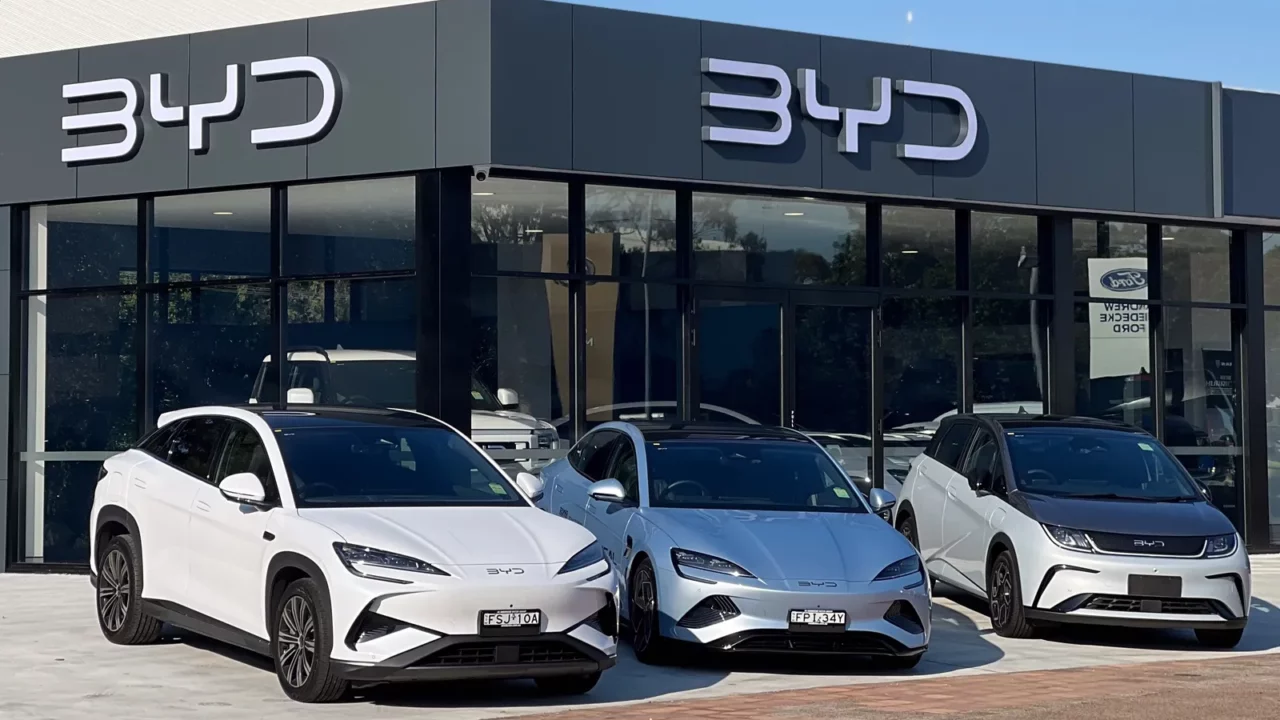
I know it looks like 3YD but it’s actually BYD it stands for Build Your Dreams
7 min read

Chinese automakers are gaining market share in Mexico and offering vehicles that are generally unavailable through official U.S. passenger-vehicle dealerships. Brands operating in Mexico include BYD, Geely, Chirey, MG, Changan, JAC, Jetour, BAIC, and others, with lineups spanning gasoline, hybrid, plug-in hybrid, and battery-electric models.
Their growth reflects China’s broader expansion into overseas markets. In Mexico, these companies compete directly with established global manufacturers. In the United States, high tariffs and federal restrictions on certain connected vehicles and technology linked to China are major barriers to direct market entry.

Chinese brands offer Mexican consumers gasoline, hybrid, plug-in hybrid, and battery-electric vehicles equipped with features such as large infotainment screens, digital instrument panels, driver-assistance systems, and upscale cabin designs.
Prices vary considerably by model and trim, so Chinese vehicles are not uniformly cheaper than every established competitor. Mexico has become an important destination for Chinese automakers expanding overseas.
By contrast, Chinese electric vehicles entering the United States face a 100% Section 301 tariff, which substantially limits their ability to compete in the U.S. passenger-vehicle market.

BYD sells battery-electric and plug-in hybrid vehicles in Mexico, including the Dolphin Mini, Seal, King DM-i, Song Plus DM-i, Shark DMO, Song Pro DM-i, Yuan Pro, and Sealion 7.
Its lineup emphasizes Blade Battery technology, extensive manufacturer-rated ranges on selected models, and warranties of up to 8 years or 200,000 km for the traction battery, subject to model-specific terms.
BYD is a major global electrified-vehicle manufacturer, but currently available official Mexican data do not establish that it leads the country’s electric-vehicle market. Its passenger vehicles remain largely absent from the United States, where high tariffs create a significant barrier to market entry.

Changan’s Mexican lineup includes SUVs such as the CS55 Plus and CS75 Plus, as well as sedans, pickups, commercial vehicles, and new-energy models. The CS55 Plus offers a 1.5-liter turbocharged engine, a 7-speed dual-clutch transmission, available driver-assistance features, and a sliding and reclining second row.
The CS75 Plus adds equipment such as a 15.4-inch central screen, a 12.3-inch passenger display, heated and ventilated front seats, a passenger massage function, and a 14-speaker audio system.
These models give Mexican shoppers additional choices in the highly competitive SUV market, while Changan passenger vehicles remain largely absent from mainstream U.S. showrooms.

Chery Automobile operates in Mexico through the Chirey name, offering Tiggo-branded SUVs with digital displays, driver-assistance technology, and modern cabin designs. Equipment and pricing vary by model and trim, so claims about affordability or the ages and motivations of buyers should not be generalized.
Chery is expanding internationally through brands including Chery, Omoda, and Jaecoo. Its passenger vehicles remain largely absent from mainstream U.S. showrooms, where federal connected-vehicle restrictions create a major barrier for manufacturers and technology with sufficient links to China.

MG originated in Britain, with its first car appearing in 1924. The brand came under SAIC Motor ownership in 2007 and now offers sedans, SUVs, hybrids, and electric vehicles in Mexico.
MG Motor Mexico reported surpassing 250,000 cumulative vehicle sales in the country by May 2026. Its Mexican lineup includes models such as the MG5, ZS, and HS, but new MG passenger vehicles remain unavailable through mainstream official sales channels in the United States.

JAC’s Mexican operation offers and assembles vehicles across SUV, pickup, commercial-vehicle, truck, and electric segments. Its production operation in Ciudad Sahagún, Hidalgo, has expanded flexible capacity for electric and combustion-powered SUVs, pickups, light commercial vehicles, and trucks.
JAC’s broad product range serves both passenger and commercial segments, although claims about reliability, ownership costs, or the occupations and motivations of its buyers require independent supporting data.

Geely’s Mexican lineup includes the Coolray Plus and other gasoline, hybrid, and electric models. The 2026 Coolray Plus starts at MXN 399,990 and uses a 1.5-liter turbocharged engine producing 172 hp. Higher trims add a 14.6-inch touchscreen, a 540-degree camera, and multiple Level 2 driver-assistance functions.
Geely is expanding internationally and increasing its vehicle exports. Its passenger vehicles remain largely absent from mainstream U.S. dealerships, while Chinese electric models face a 100% Section 301 tariff when imported directly into the United States.

Jetour’s current Mexican lineup includes the G700, T1, T2, T1 i-DM, T2 i-DM, and Dashing. The range includes gasoline and plug-in hybrid SUVs, with adventure-oriented models offering features such as multiple drive modes, intelligent all-wheel-drive systems, and substantial manufacturer-rated combined ranges measured under the NEDC cycle.
These models are available to Mexican consumers but are not sold through a mainstream official U.S. dealer network. Current sales comparisons require caution, as INEGI states that the original Jetour reporting entity ceased supplying figures in April 2025, while Jetour Soueast is now listed separately.

Omoda and Jaecoo are Chery Group brands positioned around modern design, technology, and electrified powertrains. They are expanding internationally, including through launches and proposed production arrangements in European markets.
Mexico is part of Omoda’s international footprint, but current public sales comparisons are incomplete because Chirey Motor México stopped supplying Chirey and Omoda figures to INEGI’s light-vehicle registry in May 2025.
Without current demographic and complete sales data, claims about younger Mexican buyers or rapid growth cannot be confirmed.

BAIC’s international portfolio includes SUVs, sedans, off-road vehicles, and electric models such as the X35, X55, X7, U5 Plus, and EU5. In Mexico, BAIC is associated with Motornation’s multi-brand distribution network.
BAIC passenger vehicles are not widely sold through official U.S. dealerships. However, claims about dependable ownership costs, everyday reliability, buyer income, or the brand filling a particular market gap require independent reliability, cost-of-ownership, pricing, and consumer data.

Chinese passenger vehicles face significant barriers to the U.S. market. The United States raised its Section 301 tariff on electric vehicles imported from China to 100% in 2024.
The Commerce Department also finalized rules restricting certain connected-vehicle hardware, software, and manufacturers with sufficient links to China, with major software prohibitions beginning for model year 2027 and hardware prohibitions later.
Mexico has also raised tariffs on many imports from countries without a free trade agreement with Mexico, including China. Reuters reported that new duties of up to 50% would apply in 2026, while most affected products would face tariffs of up to 35%. Tariffs, technology restrictions, security concerns, compliance costs, and commercial strategy all shape which vehicles consumers can buy.
Find out why BYD views Canada as a key growth market and how its dealership strategy could challenge established automakers in the EV segment.

Chinese automakers are changing expectations about vehicle prices, technology, and electric mobility across North America. Mexico’s experience shows how quickly new brands can attract customers when they offer strong value and modern features.
While U.S. buyers still have limited access to many Chinese models, the industry is closely watching their progress. Companies like BYD and Geely are investing heavily in global expansion and may influence future competition. The rise of these brands suggests the automotive market is entering a major period of change.
Curious why Chinese automakers are looking beyond the U.S.? Explore the full story and see why Canada could become one of the biggest opportunities for future EV growth.
Do you think Chinese automakers could seriously challenge traditional brands across North America? Tell us why in the comments, and don’t forget to give this post a thumbs up.
Don’t forget to follow us for more exclusive content right here on MSN
Read More From This Brand:
This slideshow was made with AI assistance and human editing.
We appreciate you taking the time to share your feedback about this page with us.
Whether it's praise for something good, or ideas to improve something that
isn't quite right, we're excited to hear from you.

Lucky you! This thread is empty,
which means you've got dibs on the first comment.
Go for it!