7 min read
I know it looks like 3YD but it’s actually BYD it stands for Build Your Dreams
7 min read

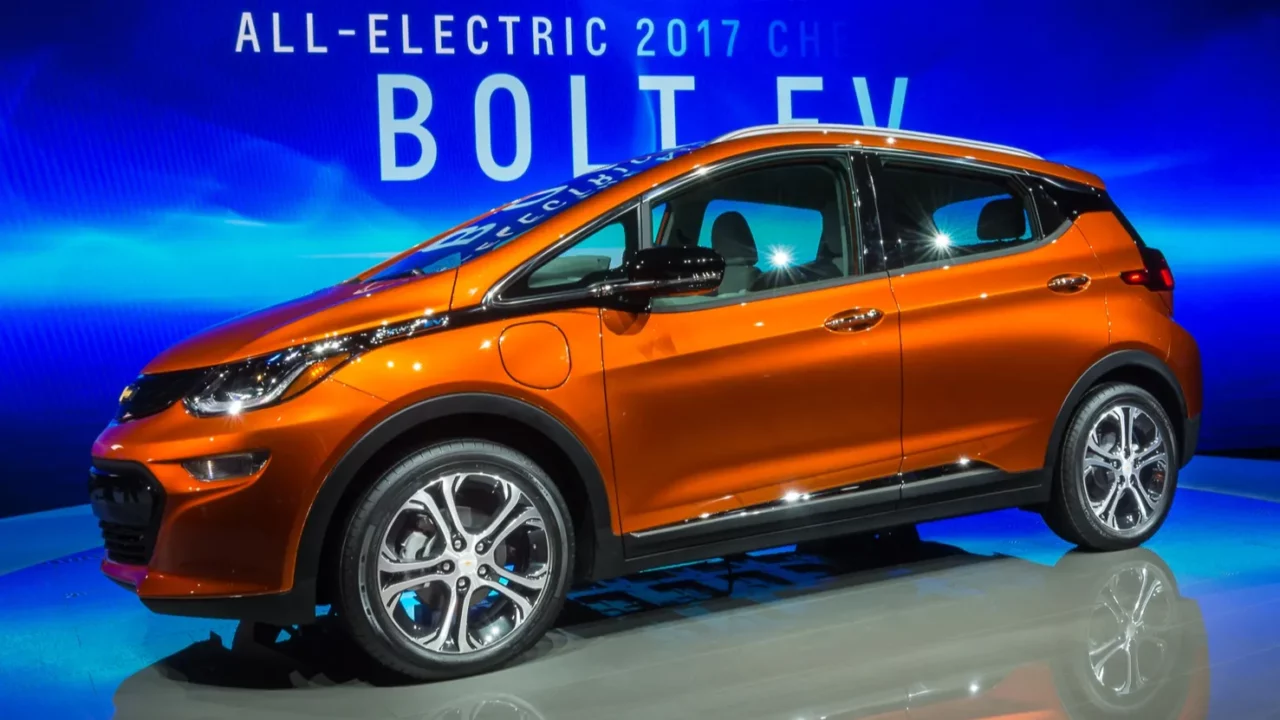
The 2027 Chevy Bolt will restart its rivalry with the all-new 2026 Nissan Leaf in the affordable electric car market. Chevy targets sub-$30k pricing for the 2027 Bolt, with launch trims starting at approximately $29,990. GM estimates 255 miles from a 65-kWh LFP pack.
Nissan sets the 2026 Leaf at $29,990; the S+ with the 75-kWh pack is EPA-rated to travel up to 303 miles. The Leaf’s standard battery is 52 kWh, which is smaller than the Bolt’s standard pack.

The 2027 Chevy Bolt can charge its 65 kWh battery from 10% to 80% capacity in 26 minutes using DC fast charging. The Bolt’s DC fast-charging rate is 150 kilowatts (kW). It will use only the new NACS (North American Charging Standard) charging port.
The 2026 Nissan Leaf’s larger 75 kWh battery needs an estimated 35 minutes to charge from 10% to 80%. The Leaf offers a choice between a 52 kWh standard pack and a 75 kWh pack. It will include NACS and the J1772 port.

The 2027 Chevy Bolt’s electric motor will produce 210 horsepower (hp) and 169 pound-feet (lb-ft) of torque. This gives it a power advantage over the base 2026 Nissan Leaf S trim, which offers 174 hp. Both electric vehicles use front-wheel drive (FWD).
Higher-trim 2026 Leaf models produce 214 hp, which is slightly more than the Bolt’s 200 hp. The Leaf is longer with a 105.9-inch wheelbase, compared to the Bolt’s 105.3 inches. The Bolt offers a greater maximum cargo volume of 56.3 cubic feet.

The 2027 Chevy Bolt will feature the Super Cruise hands-free highway driving system on some trims. The Bolt is equipped with an 11.3-inch center-dash infotainment screen and an 11-inch driver information screen.
The 2026 Nissan Leaf uses the ProPilot Assist system, which requires hands-on steering. The Leaf will come with dual 14.3-inch screens for its gauge cluster and technology display. Both cars will utilize Google-built-in software for navigation.

In 2023, the Chevrolet Bolt EV and EUV models sold a combined 62,045 units in the U.S. This was the model’s best annual sales total since its introduction in 2017. Chevrolet sold 62,045 Bolts in 2023, with Q4 2023 accounting for 12,551.
The Nissan Leaf sold 7,152 units in the United States during the full year of 2023. The significant sales difference demonstrated that the Bolt was a market favorite before its temporary discontinuation.

The 2023 Chevrolet Bolt EV had an EPA-estimated range of 259 miles from its 65 kWh battery pack. The Bolt EV’s efficiency rating was 120 combined Miles Per Gallon equivalent (MPGe). The larger Bolt EUV model had a lower 247-mile range rating.
The 2023 Nissan Leaf’s standard model was equipped with a 40 kWh battery and an EPA-estimated range of 149 miles. The Leaf SV Plus offered a 212-mile range from its larger 62 kWh battery. The Bolt’s single-range option exceeded the Leaf’s battery range.

The 2023 Chevrolet Bolt EV produced 200 hp and 266 pound-feet (lb-ft) of torque. This power allowed the Bolt EV to accelerate from 0 to 60 miles per hour (mph) in approximately 6.5 seconds.
The 2023 Nissan Leaf’s base 40 kWh model generated 147 hp and 236 lb-ft of torque. The higher-powered SV Plus model produced 214 hp and 250 lb-ft of torque. The Leaf Plus reached 60 mph in about 6.8 seconds.

The 2023 Chevrolet Bolt EUV offered 16.3 cubic feet of cargo space behind the rear seats. Its total maximum cargo volume was 56.9 cubic feet with the rear seats folded down. The base 2023 Bolt EV had 16.6 cubic feet of cargo space behind the second row.
The 2023 Nissan Leaf offered 23.6 cubic feet of cargo space behind its rear seats, a greater volume than both Bolt models. However, the Leaf’s total cargo volume with the rear seats folded was only 30.0 cubic feet.

The 2023 Chevrolet Bolt EV’s 65 kWh battery required approximately 7.5 hours for a full Level 2 home charge. The Bolt used the Combined Charging System (CCS) port for DC fast charging. Its quick charging could add 100 miles of range in 30 minutes.
The 2023 Nissan Leaf’s base 40 kWh battery also required 7.5 hours for a full Level 2 charge using its 6.6 kW charger. The larger 62 kWh battery needed around 11.5 hours. The Leaf used the slower CHAdeMO fast-charging port.

When the Chevy Bolt launched in 2017, it had an EPA-estimated range of 238 miles on a single charge. This was a long distance for a non-luxury EV. The Bolt’s battery had a capacity of 60 kWh.
In 2017, the Nissan Leaf’s standard range was 107 miles from its 30 kWh battery. The 2018 redesign increased the Leaf’s range to 151 miles with a 40 kWh battery. By 2019, the Leaf Plus model boosted the range to 226 miles.

The 2017 Chevrolet Bolt EV LT trim had a starting MSRP of $36,620 before any tax credits. This higher price reflected its new technology and superior 238-mile long-range battery.
The 2017 Nissan Leaf S trim had a lower starting MSRP of $30,680. This price was for its base model, which has a 107-mile range. The lower cost was partly due to the Leaf’s more extended history.

In 2017, its first full year of sales, Chevrolet sold 23,297 units of the Bolt EV in the United States. This strong initial figure showed high public demand for the long-range electric car.
The Nissan Leaf sold 11,230 units in the U.S. market in 2017. This represented a decrease from the total sales of the prior year. The Bolt’s superior 238-mile range drew buyers away from the Leaf’s 107-mile range.

A Chevrolet representative stated, “The new Bolt will deliver an estimated 255 miles of range, making it a competitive choice for the everyday EV buyer.” This highlights the 2027 model’s emphasis on practicality for everyday driving needs.
A Nissan executive said, “With a best-in-class range of up to 303 miles, the all-new LEAF shows our dedication to giving consumers more for their money.” This highlights the 2026 Leaf’s priority on maximum driving distance.

An 8-year or 100,000-mile limited warranty on the battery pack covers both the Chevrolet Bolt and Nissan Leaf models. This warranty protects against the battery capacity dropping below 70% of its original rating.
The Bolt’s standard basic warranty on the vehicle is for 3 years or 36,000 miles of travel. The Leaf also offers a 3-year or 36,000-mile basic limited warranty for non-battery car components.

The Nissan Leaf was introduced in the U.S. in December 2010, making it one of the first mass-market electric cars. Before the Chevy Bolt arrived in late 2016, the Leaf was the highest-selling electric car globally.
From 2010 to 2016, Nissan sold over 100,000 Leaf units in the U.S. Early Leaf models had a 73-mile EPA-rated range from a small 24 kWh battery. This was a technological breakthrough at the time.
Thinking about what a modern Xterra might look like? Check out Nissan confirms Xterra’s return with modern updates 2026.

The return of the Chevy Bolt and the new Nissan Leaf generation show the importance of the affordable electric vehicle segment. The 2027 Bolt’s estimated maximum DC charging rate of 150 kW is a significant improvement over the older model’s 55 kW rate.
The 2026 Leaf’s top 303-mile EPA-estimated range indicates that Nissan is focused on achieving greater distance. Both high-quality electric cars will start below $30,000 for the base models before destination fees.
Wondering how the Z Heritage Edition borrows from the GT-R spirit? Read more in Nissan Z Heritage Edition could bring GT-R flavor.
Which one wins your vote this time? Drop your pick below.
Read More From This Brand:
Don’t forget to follow us for more exclusive content right here on MSN
This slideshow was made with AI assistance and human editing.
We appreciate you taking the time to share your feedback about this page with us.
Whether it's praise for something good, or ideas to improve something that
isn't quite right, we're excited to hear from you.

Lucky you! This thread is empty,
which means you've got dibs on the first comment.
Go for it!