Was this helpful?
Thumbs UP Thumbs Down

BYD’s global sales surge as Chinese automaker expands overseas and puts more pressure on traditional carmakers

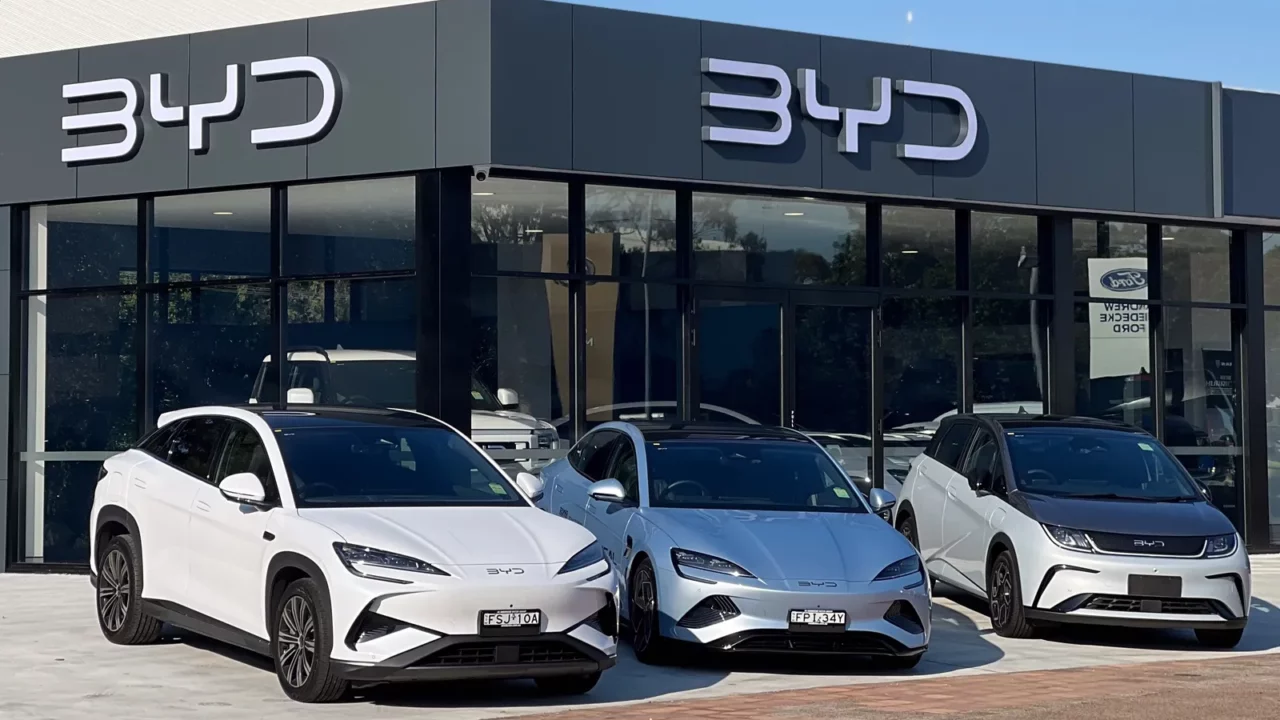
BYD Dealership
Shenzhen China BYD factory, logo.

BYD’s European sales surge puts global carmakers on notice

BYD’s European sales jumped 131% in August 2026, reaching 26,103 vehicles and making it the best-selling Chinese car brand in the region that month. Chinese brands overall recorded 97,639 registrations, giving them a record 11.7% share of the European market.

The broader market grew only 4.6%. The numbers show how quickly Chinese automakers are expanding beyond their home market, creating a new competitive challenge for established car companies.

Zeekr showroom

Chinese car brands now hold a record share in Europe

Chinese car brands more than doubled their European sales in August, reaching a record 11.7% market share. Their combined registrations rose 111% from a year earlier, while Europe’s overall market increased only 4.6%.

That growth matters for drivers because Chinese automakers are expanding across electric cars, hybrids, and plug-in hybrids. Their rising sales give buyers more choices while increasing pressure on established European, Japanese, and American automakers.

BYD Showroom

BYD has become the leading Chinese brand in Europe

BYD ranked as Europe’s top-selling Chinese car brand in August, with 26,103 registrations. Its August performance placed it ahead of Chery Group and SAIC Motor’s MG brand for that month.

Through the first 8 months of 2026, BYD registered 232,600 vehicles in Europe, up 144% from the same period a year earlier. That total put BYD ahead of other major Chinese brands and showed that its European growth is becoming more than a one-month jump.

Car dealership

BYD is gaining ground while Europe’s car market grows slowly

BYD’s growth stands out because Europe’s overall new-car market is expanding much more slowly. Chinese brands increased their August registrations by 111%, compared with only 4.6% growth for the broader European market.

BYD alone increased 131%. This means the company is gaining registrations faster than the surrounding market. For European drivers, the shift could bring more competition in vehicle prices, technology, electric powertrains, and features as more Chinese models reach dealerships.

Chery dealership.

Chery and BYD are driving much of China’s European growth

BYD is not expanding alone. Chery recorded 24,332 European registrations in August, up 210% from a year earlier, while BYD reached 26,103, up 131%. Together, BYD and Chery accounted for about 60% of the increase in Chinese-brand registrations during the month.

MG, owned by SAIC Motor, ranked third with 21,132 registrations, up 32%. The changing rankings show that several Chinese automakers are competing aggressively for European buyers.

Shot of an EV battery pack.

Chinese automakers are expanding beyond battery EVs

Chinese automakers are not relying only on battery-electric vehicles to grow in Europe. Plug-in hybrid registrations from Chinese brands reached 33,384 in August, roughly three times the level recorded a year earlier.

Those vehicles represented about 34% of Europe’s plug-in hybrid market that month. The mix gives Chinese companies another way to reach drivers who want electric driving but still want an engine for longer trips. It also helps them compete across more vehicle segments.

Shot of tariff news headlines.

Europe’s tariff rules give some Chinese hybrids an edge

European trade rules currently apply different treatment to Chinese-built battery-electric vehicles and plug-in hybrids. The European Union has imposed additional duties of up to 35.3% on Chinese-made battery-electric vehicles, in addition to the standard 10% import tariff.

Chinese-built plug-in hybrids are not currently subject to these additional EV duties. The different tariff structures can affect pricing, competition, and automakers’ strategies in the European vehicle market.

Shot of BYD showroom.

China’s domestic car market is pushing automakers overseas

Chinese automakers are expanding into overseas markets as competition and weaker domestic demand put pressure on sales. In August 2026, China’s passenger-vehicle exports, including complete vehicles and CKD kits, rose 77.8% year over year to 888,000 units, while domestic retail sales fell 23.6% to 1.541 million.

New-energy vehicle retail sales dropped 10.1% to 1.005 million, although battery-electric sales increased 0.8% and plug-in hybrid sales declined 29.6%. New-energy vehicle exports surged 154.7% to 518,000 units, highlighting the growing importance of international markets for Chinese automakers.

BYD Dealership

BYD’s European rise is changing the competition for car buyers

BYD’s expanding European presence gives drivers another major brand to consider when shopping for a new car. The company sells electric and hybrid vehicles across multiple markets, allowing it to compete beyond a single powertrain category.

Its 232,600 European registrations through August show that the company is building meaningful sales volume. For established automakers, that growth means they face stronger competition from a manufacturer that is expanding quickly across several vehicle segments.

Shot of BYD showroom.

BYD’s growth has moved beyond a single European market

BYD’s European expansion is significant because the company’s growth is being measured across a broad regional market rather than within a single country. Through August, it had registered 232,600 vehicles, up 144% year over year.

Its August result also placed it ahead of other Chinese brands for the month. The scale of those registrations indicates that BYD is developing a wider European customer base, rather than depending entirely on isolated launches or temporary sales increases.

XPeng Dealership

Chinese brands are approaching 10% of Europe’s year-to-date market

Chinese brands reached 9.9% of Europe’s new-car market during the first eight months of 2026, compared with 5.2% during the same period a year earlier. Their combined registrations reached 913,703 vehicles.

BYD recorded 232,600 registrations, MG reached 229,638, and Chery Group reached 226,534. The close totals show how tightly the three Chinese automotive groups are competing for European registrations.

BMW logo displayed on a dealership.

European automakers face more pressure on price and technology

The rapid growth of Chinese brands puts additional pressure on automakers competing in Europe on price, technology, and vehicle features. Chinese companies have expanded quickly into electric cars and hybrids, offering consumers more choices.

Reuters reported in September 2026 that some Chinese automakers can develop a new electric car in 18 months or less, highlighting faster product-development cycles than many traditional Western manufacturers.

Combined with growing overseas sales, that speed gives Chinese brands another way to challenge established automakers in Europe.

Elon Musk laughed at BYD in a 2011 interview, but BYD now leads the world in EV sales, underscoring why BYD’s earlier U.S. bus work matters as the company weighs bigger passenger-car ambitions.

Shot of BYD showroom.

BYD still faces major barriers before entering the US market

BYD’s European success does not mean the company can quickly enter the U.S. passenger-car market. Chinese EV makers face steep U.S. trade barriers, while federal connected-vehicle rules restrict certain sales and imports involving Chinese-linked connected-vehicle software beginning with model year 2027.

That leaves Europe as an important overseas market for BYD as the company continues to expand internationally. For American drivers, direct access to BYD passenger cars remains limited. However, the company’s growing global scale could still influence competition, technology development, and pricing strategies across the wider auto industry.

Jim Farley admits he has ‘trust issues’ with Tesla, endorses Waymo instead, and adds another view of how U.S. auto leaders are judging Chinese tech, Tesla, and autonomous vehicle partnerships.

Could BYD’s overseas expansion push automakers like Ford, GM, and Toyota to improve their EV offerings?

Don’t forget to follow us for more exclusive content right here on MSN

Read More From This Brand:

This slideshow was made with AI assistance and human editing.

Was this helpful?
Thumbs UP Thumbs Down
Prev Next
Share this post

Lucky you! This thread is empty,
which means you've got dibs on the first comment.
Go for it!

Send feedback to evsmarts


    We appreciate you taking the time to share your feedback about this page with us.

    Whether it's praise for something good, or ideas to improve something that isn't quite right, we're excited to hear from you.